- The Impact Journal
- Posts
- This Stanford Student Raised $50,000+ to Support Armenian Youth in Rural & Border Communities.
This Stanford Student Raised $50,000+ to Support Armenian Youth in Rural & Border Communities.
Margarita was 14 when she founded Armenian Youth Education Aid (AYEA) - a 501(c)(3) nonprofit expanding education access in Armenia's rural and border communities.

Porte Global
January 04, 2026

In the middle of her freshman year of high school, Margarita watched from afar as her homeland was pulled into war. She was just 14 years old—but the moment wasn’t lost on her.
“I remember watching everything unfold on the news,” she said. “There were already so many organizations sending short-term aid. But I wanted to create something long-term. Something that could rebuild Armenia’s future from the ground up.”
That “something” became Armenian Youth Education Aid (AYEA)—a 501(c)(3) nonprofit focused on expanding education access in Armenia’s rural and border communities. Since launching, AYEA has raised over $50,000 and supported a wide range of grassroots initiatives.
Here’s how it all started—and what she’s learned from building it.
If you’re a current high school student interested in starting your own initiative and standing out in university applications — you can sign up for a 30-minute extracurricular review. During the call, we'll:
a) Learn about your university goals
b) Review your extracurricular profile
c) Help you shape a unique project idea.
#1: What made you land on studying international relations?
Margarita: I definitely didn’t start out knowing what I wanted to do. In high school, I went from pre-med to neuroscience to history before I found international relations. But looking back, the signs were always there.
Growing up, my dad would always have Armenian news channels and other channels on. We were always keeping up with what was happening. My homeland and culture has always been so important to me.
But the turning point came in 2020 when Armenia saw a very brutal war, especially concerning the territory of Artsakh. That really pushed me to take action. Armenia was in the midst of war, landlocked between two enemy countries. I realized how much I cared and wanted to contribute.
In 2021, I felt this awakening within myself to give back to my homeland, do something I was passionate about, and strive for that with my career. Now, I’ve become so passionate about understanding global systems actors and how they work.
#2: What is Armenian Youth Education Aid (AYEA)?

Margarita: AYEA is a 501(c)(3) nonprofit I co-founded when I was 14. Our mission is to improve educational access and quality for youth in Armenia—especially in rural and border communities that are often under-resourced.
We’ve raised over $50,000 directly support youth and communities across Armenia through grassroots and local-led projects. Some of these include:
Reconstructing the restrooms for a school in Lusa village. It laid the foundation for our continued partnership with the village where we later renovated and reconstructed a local educational centre.
Working with another NGO there called Zaknir, which provides hundreds of books to Armenian children.
Funding a village music school in Konzoresk that was dying because they didn’t have enough musical instruments to keep going and run their classes. Our team delivered instruments like flutes and harps, many of which I brought over myself.
#3: What gave you the courage to begin AYEA?
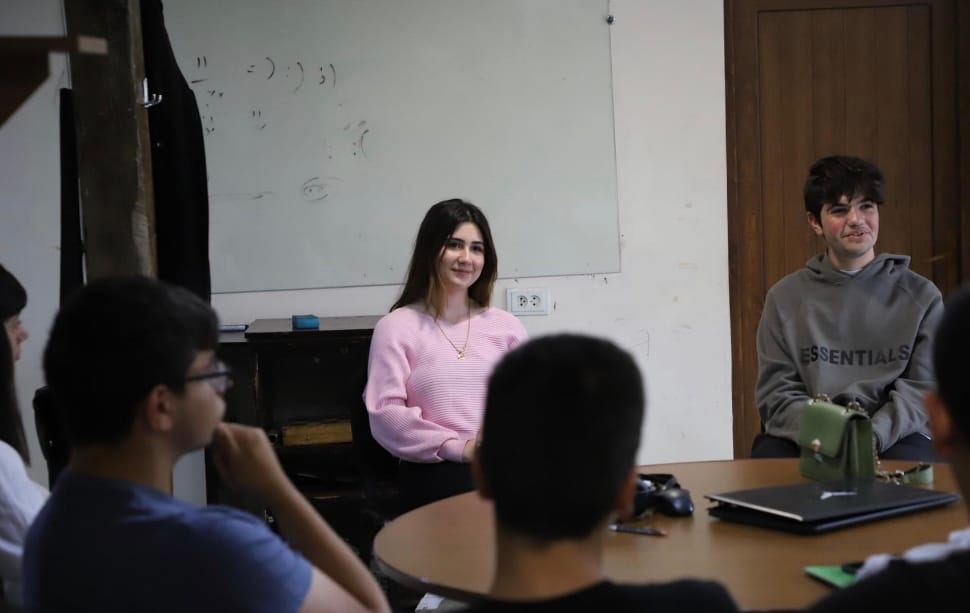
Margarita: Again, the 2020 war in Armenia was devastating. When Azerbaijan attacked the territory Artsakh - which belongs to Armenia and sovereign Armenian territories - it led to very big losses on the Armenian side. Not just losses of land, but also losses of people.
One of those was a very close family member of mine. He was just 18 when he lost his life in the war.
At that point, I was 14 and living in California. I wanted to do something. But when I looked into existing organizations, most only accepted volunteers 18 and older. There was no platform for me to be involved, despite being full of ideas and passion.
So I thought: why not create a platform for people like myself? I knew I wasn’t the only young person who felt this way. So many people my age wanted to help, but didn’t know how.
AYEA was born out of that gap. I knew I didn’t want to focus just on short-term aid. I wanted to focus on education—something that would have lasting impact. Education creates future leaders, scientists, doctors, and presidents. If we want to rebuild Armenia long-term, that’s where we have to start.
I reached out a girl named Diana who had been making a couple TikToks on my for you page talking about Armenian culture and posting about her advocacy efforts.
So I sent her an Instagram DM, and we co-founded AYEA.
#3: Being an organization based in the United States - how did you find Armenian organizations?
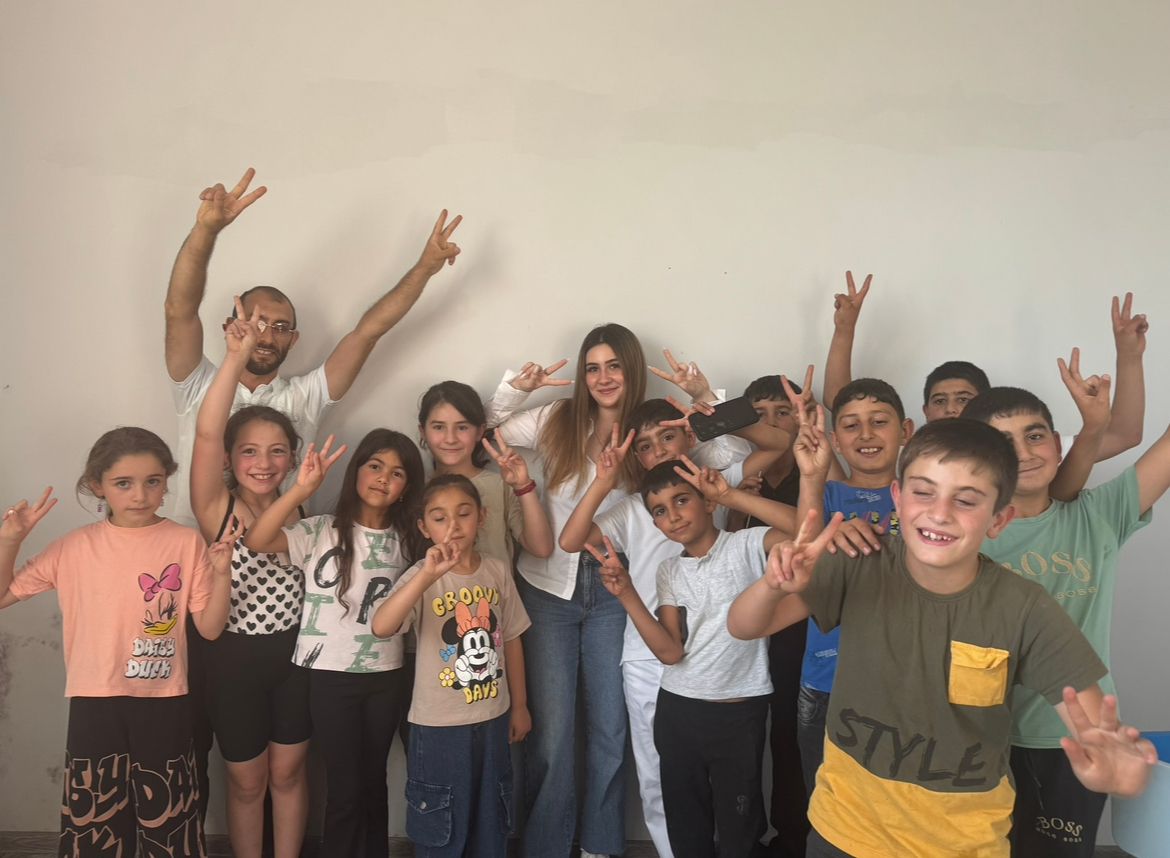
Margarita: We were really intentional about that part. There were already concerns around fraudulent or ineffective nonprofits, so we wanted to be extremely careful about who we worked with.
Eventually, we found someone named Miasnik. He’s a war veteran who had started his own grassroots nonprofit after returning from the frontlines. He didn’t come from a flashy background, but he was the real deal—someone who deeply understood the communities we wanted to serve.
We reached out and explained that we were diaspora Armenians hoping to help. From that day on, he’s been our guy on the ground. For four years now, he’s been helping us execute every single project in Armenia.
#4: What’s the biggest barrier Armenian students face in education?

Margarita: One of the biggest things is this unspoken expectation that kids will go into agricultural work. That’s the default path in many villages. And while there’s absolutely dignity in that work, it often closes the door to other possibilities.
So our challenge has been: How do we inspire kids to dream bigger—without disrespecting their roots?
We try to spark curiosity without overwhelming their lives. Our educational center classes only run 1–2 hours per day. Just enough to plant a seed of interest—whether that’s in computer science or English or Armenian literature.
And at the same time, we created a new class this year. It teaches students to value their culture, their village, and their traditions. We want to expand their world, not pull them away from it.
#5: What’s your biggest takeaway?

Margarita: Resilience.
We’ve worked mostly in border communities. One that sticks with me is Khndzoresk. You can literally see the Azerbaijan border from there. Their school windows still have bullet holes from previous violence.
And yet—those kids still show up to our programs. They play music. They code. They smile. They learn.
They have every reason to feel hopeless. But they show up anyway.
Their resilience inspired my own. If they can keep showing up, so can I—whether that’s staying up late to write a grant, organizing a fundraiser, or skipping a night out to finish a campaign.
They remind me what this work is really about.
#6: Any last messages you want to share?

Margarita: AYEA is not just me—it’s all of us.
I’m just one person helping to guide the ship, but the work happens because of our team. I’m so grateful for Diana (my co-founder), and our cabinet members: Maria, Emily, Rubina, Jackie, and Ellen. They’re the reason we’ve been able to do any of this.
We’re all scattered across the U.S.—Bay Area, LA, San Diego, New York—but we make it work because we care deeply.
If you’re a current high school student interested in starting your own initiative and standing out in university applications — you can sign up for a 30-minute extracurricular review. During the call, we'll:
a) Learn about your university goals
b) Review your extracurricular profile
c) Help you shape a unique project idea.
Stay Connected
Connect with Margarita: Linked-In